
Recovering comfortably after hernia surgery does not require complicated meal plans or expensive health foods. In fact, a supportive diet for hernia patients after surgery is already familiar in most Chennai kitchens, provided you know which everyday staples aid wound healing and which dishes can trigger gas, bloating, or painful straining.
During the first few weeks after repair, keeping stools soft and giving your body enough protein and fluids protects your surgical site while tissues heal.
This guide walks you through what to eat stage by stage, from gentle fluids and soft idlis in the first 48 hours to balanced home meals, along with a sample Chennai meal plan, foods to pause temporarily, and warning signs that warrant calling your surgeon.
Why Your Diet Matters After Hernia Surgery
Food itself does not close a hernia that work is done by your surgeon's sutures or mesh but what you eat and drink directly shapes how smoothly your tissues heal and how comfortable you feel during the first few weeks. Three simple biological principles explain almost every dietary guideline you will receive after surgery:
-
Straining Puts the Repair at Risk: Pushing hard on the toilet causes a sudden spike in pressure inside your abdomen. That extra strain pulls directly against fresh stitches and healing tissue around the repair site, causing pain and increasing the risk of early complications. Choosing fibre-rich foods and steady fluids keeps your stools soft and easy to pass acting as everyday physical protection for your operation.
-
Your Body Needs Protein to Heal: Tissue repair requires extra building blocks. Foods such as eggs, soft-cooked chicken, fish, dal, paneer, and curd supply the amino acids needed to rebuild collagen, strengthen abdominal muscles, and support your immune system against wound infection. It is common to feel tired or slightly nauseated after anaesthesia, so eating small, regular protein-rich meals helps prevent weakness and delayed healing.
-
Painkillers and Rest Can Cause Constipation: Anaesthesia, certain prescription pain medicines, and spending more time resting slow down the natural wave-like contractions of your bowel. Drinking plenty of fluids throughout the day such as plain water, thin buttermilk, and tender coconut water alongside short, gentle walks around your home keeps digestion moving smoothly without straining.
Diet for Hernia Patients After Surgery: Stage by Stage
You do not need to eat perfectly from day one. Most patients progress gradually, and your surgeon may adjust the plan for your type of hernia and operation.
The first 48 hours: light and gentle
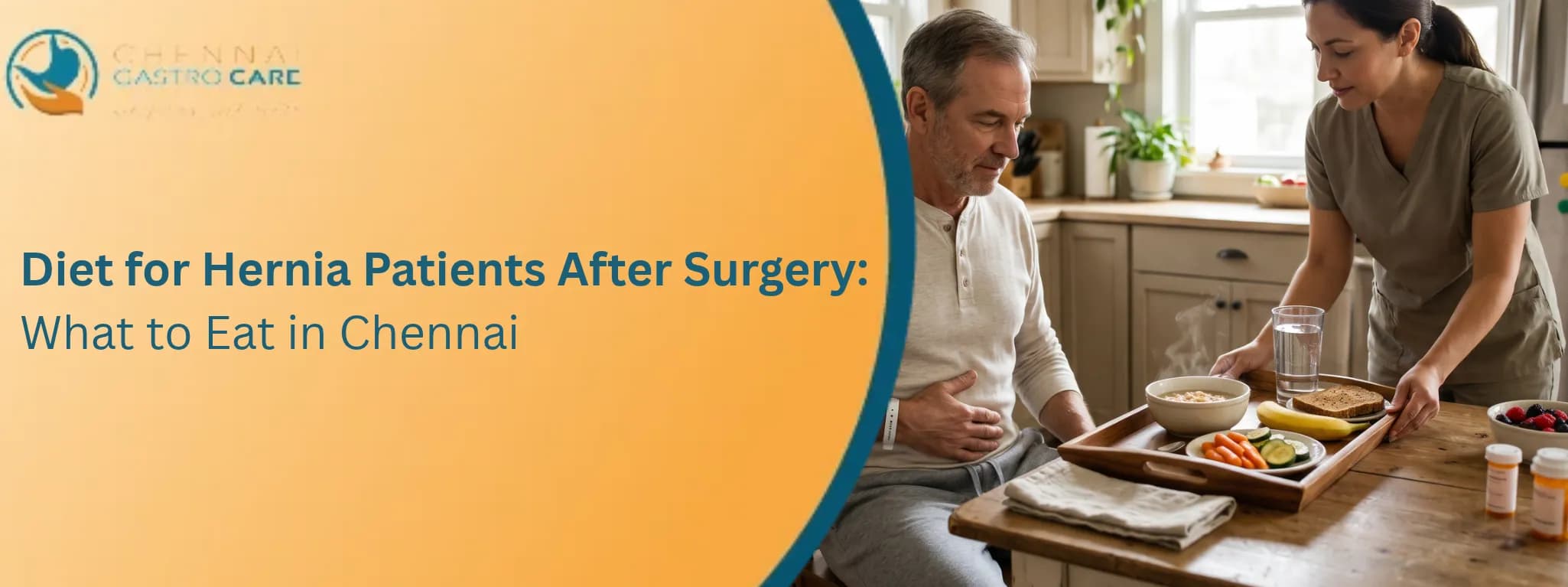
Start with small, frequent meals, because eating smaller meals more often avoids pressure on the surgical area. Good Chennai choices are rice or ragi kanji, soft idli with mild sambar, curd rice, a light clear rasam, fresh buttermilk and tender coconut water.
Days 3 to 14: build protein and fibre gently
Add soft protein such as moong dal, boiled egg, and light fish or chicken curry with little oil. Bring in fibre slowly, because fibre helps in the long run but can increase gas and bloating if introduced too early. Cooked vegetables, keerai poriyal and ripe papaya or banana are easy starting points.
Weeks 2 to 6: return to regular home food
Most people can gradually go back to normal home-cooked meals, keeping them light on oil and spice. Complete recovery can take around 4 to 6 weeks, so continue your fluids, fibre and walking even once you feel well.
Best Chennai Foods to Eat After Hernia Surgery
Everyday South Indian home cooking suits post-hernia recovery remarkably well when prepared with minimal oil and mild spices. Steamed, fermented, and lightly simmered dishes are gentle on a sensitive stomach, easy to chew and digest, and simple to balance for wound healing and regular bowel movements.
-
Easy, Comforting Carbohydrates: Gentle carbohydrates supply steady energy without sitting heavily in your stomach or triggering bloating. Steamed idli, plain dosa, small portions of ven pongal (made with light ghee and minimal pepper), ragi koozh, rice kanji, and soft-cooked rice mashed with dal are ideal staples during the early weeks.
-
Protein for Tissue Healing: Your body needs extra protein to rebuild abdominal tissue and strengthen the surgical repair.
- Vegetarian options: Well-cooked moong dal, toor dal, fresh curd, and soft paneer provide easy-to-digest protein. Once early post-operative gas settles, you can gradually add well-cooked sundal in small portions.
- Non-vegetarian options: Boiled or poached eggs, steamed or lightly cooked fish, clear chicken soup, and mild, low-oil chicken curry offer lean, high-quality protein without heavy fats.
-
Gentle Fibre and Fruit for Soft Stools: Adding fibre gradually alongside plenty of water keeps stools soft so you never have to strain on the toilet. Cooked leafy greens (keerai), mild pumpkin, beans, and carrot kootu, ragi, and oats are easy on the gut. For fruit, choose ripe banana, papaya, guava, and orange. Once you return to regular meals, vazhaithandu (banana stem) poriyal is an excellent traditional, fibre-rich side dish.
-
Steady Fluids for Hydration and Digestion: Fluids work alongside fibre to prevent constipation and support circulation around the healing wound. Plain water, thin buttermilk (neer mor), fresh tender coconut water, clear soups, and mild herbal teas all count toward your daily intake. Because Chennai's heat and humidity cause steady fluid loss even when you are resting indoors, keep a bottle nearby and sip throughout the day rather than drinking large amounts at once.


Foods to Avoid After Hernia Surgery
You do not need to give up your favourite foods forever. Most of these only need a break for the first few weeks.
Fried and heavy foods
Vada, bajji, bonda, puri, parotta, biryani and rich gravies digest slowly and can cause bloating. Heavy, greasy meals slow digestion and cause bloating.
Gas-forming foods
Carbonated drinks, beans, onions and very oily foods are best avoided early in recovery. In Chennai kitchens this includes raw onion salads, rajma, chana curries, and cabbage and cauliflower dishes.
Very spicy or acidic foods
Spicy, acidic and fatty foods, as well as caffeine and alcohol, can irritate the stomach. Go easy on pickles, heavily tamarind-based dishes and strong filter coffee at first.
Sweets, excess tea and alcohol
Rich sweets and sugary drinks add little nutrition, and alcohol interferes with healing and mixes poorly with pain medication.
A Sample One-Day Chennai Meal Plan
This is a general guide for the second week after keyhole repair, not a prescription. Adjust portions to your appetite and follow your surgeon's advice.
| Meal | Suggested options |
|---|---|
| Early morning | Warm water, or a small glass of buttermilk |
| Breakfast | 2 idlis with mild sambar, or ragi porridge, plus a banana |
| Mid-morning | Tender coconut water or papaya slices |
| Lunch | Soft rice, dal, keerai poriyal, a little curd, and a small piece of fish if you eat non-vegetarian |
| Evening | Thin buttermilk or clear soup with a handful of soaked nuts |
| Dinner | Chapati or dosa with vegetable kootu, or curd rice with a soft vegetable |
| Bedtime | Warm water; a small ripe fruit if you feel hungry |
Preventing Constipation Without Straining
Even a perfect diet can fall short for a few days after surgery. Plan ahead so you are not caught off guard.
-
Drink fluids steadily through the day, rather than large amounts at once.
-
Add fibre gradually, along with extra water, because fibre without fluid can backfire.
-
Walk a little every day, as your surgeon allows.
-
Never strain on the toilet. If stools stay hard, ask your doctor about stool softeners.
Special Situations: Diabetes, Vegetarian Diets and Hiatus Hernia
Some patients need a slightly different plan. Tell your surgeon about these at your consultation.
If you have diabetes, keep rice and sweet portions measured, and favour dal, vegetables and millets to keep blood sugar steady, which also supports wound healing. Vegetarians can meet protein needs with dal, curd and paneer without difficulty. After a hiatus hernia repair, the plan is usually softer and slower, with a longer period of avoiding acidic and spicy food, so follow the specific instructions you are given.
When to Call Your Surgeon
Mild bloating and some discomfort are common, but certain signs need prompt attention. Contact your surgeon or go to a hospital if you have:
- Persistent vomiting or being unable to keep fluids down
- Severe or worsening abdominal pain
- Fever, or redness, swelling or discharge at the wound
- No bowel movement for several days despite fluids and fibre
- A new bulge near the repair
Recovery Support in Chennai: Chennai Gastro Care
Clear, practical advice makes recovery easier, especially when it fits the food you actually cook at home. At Chennai Gastro Care in Alwarpet, your surgeon explains your recovery plan, including diet and activity, before you leave, and the team is available for follow-up questions.
Dr. Deepak Subramanian (MBBS, MS, MRCS Edinburgh, FIAGES, FALS), Senior Consultant in Laparoscopic, GI and Bariatric Surgery, has more than 14 years of experience and over 5,000 surgeries, with a focus on laparoscopic repair of inguinal, ventral, umbilical and hiatus hernias. The clinic holds a 4.9 Google rating from 215+ patients.
Planning surgery or already recovering? Chat with our care assistant for quick guidance and support.