
Hearing that you need hernia surgery often brings up concerns about painful incisions, long hospital stays, and weeks away from work. Minimally invasive (laparoscopic or "keyhole") hernia repair has transformed this experience, offering patients significantly less postoperative pain, minimal scarring, and a much faster return to their normal routines.
However, while it is a highly advanced and effective approach, it isn't automatically a one-size-fits-all solution. This guide breaks down exactly who stands to benefit the most from minimally invasive hernia surgery, when traditional open repair remains the safer medical choice, and what you can expect from your recovery journey in Chennai.
Understanding Minimally Invasive Hernia Surgery
Hearing medical terms like "laparoscopic," "TEP," or "robotic" during a consultation can feel overwhelming. In reality, minimally invasive hernia surgery is a gentle, straightforward way to repair a weak muscle wall without making a large cut. Understanding how the procedure works and what those terms actually mean helps you walk into surgery with confidence.
Small Cuts Instead of One Large Incision
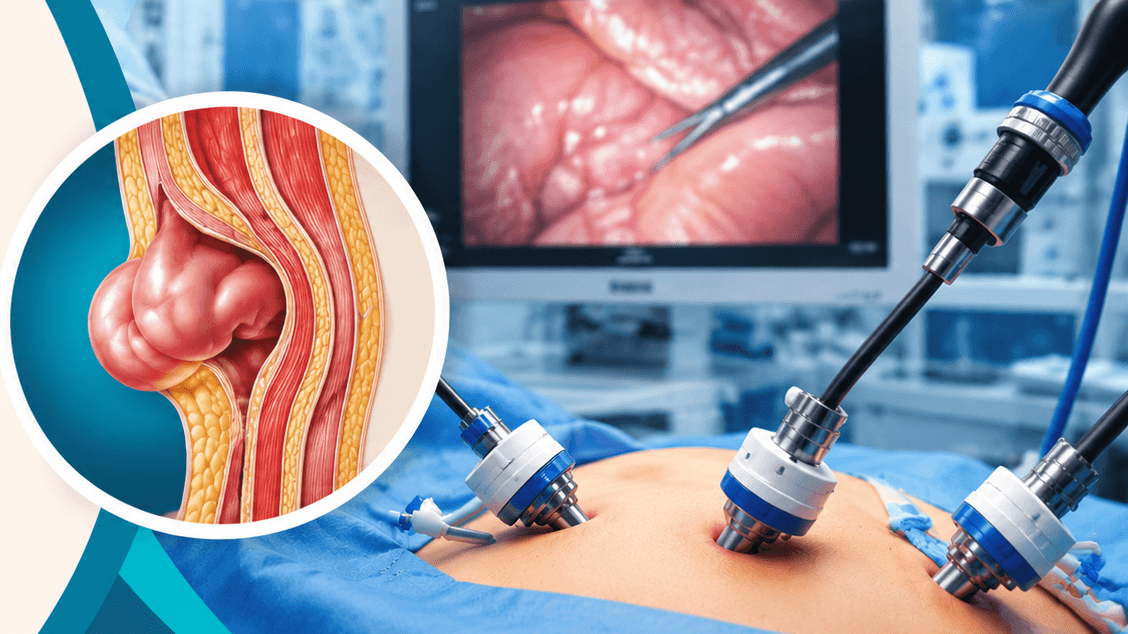
Traditional open surgery requires making one larger cut through skin, fat, and muscle tissue to reach the hernia, which naturally causes more soreness afterward. With minimally invasive surgery, your surgeon works through two or three tiny cuts, each about 0.5 to 1 cm wide. Because healthy muscle tissue is left undisturbed, your body experiences far less physical strain leading to milder pain, fewer painkillers, and a faster return to daily life.
How the Camera and Mesh Work Together
Through one of the tiny cuts, the surgeon inserts a thin tube with a high-definition camera called a laparoscope. This gives the surgical team a clear, magnified view of your abdominal wall from the inside, making it easy to repair the main hernia and spot any smaller hidden weaknesses nearby.
Instead of pulling torn muscle edges together with tight stitches, the surgeon places a flexible surgical mesh over the weak spot from the inside. Think of it like patching a tire from the inside out: your body's natural abdominal pressure presses the mesh flat against the muscle wall, holding it securely in place as your tissue heals into it.
Keyhole, Laparoscopic, TEP, TAPP, and Robotic: What the Words Mean
Doctors often use several different terms for minimally invasive repair, which can easily sound confusing:
-
Keyhole vs. Laparoscopic: These two words mean the exact same thing. "Keyhole surgery" is simply the everyday name for laparoscopic surgery.
-
TEP vs. TAPP (For Groin Hernias): These are the two main ways a surgeon reaches a groin hernia using keyhole tools:
- TAPP (Transabdominal Preperitoneal): The surgeon enters the main abdominal space to view and repair the hernia from behind.
- TEP (Totally Extraperitoneal): The surgeon works entirely between the layers of your abdominal wall without entering the main abdominal cavity.
- Which one is better? You do not need to worry about choosing between them. Your surgeon selects the safest route based on your anatomy and any past surgeries. (For a broader comparison, read our guide on Types of Hernia Repair Surgery.)
-
Robotic Hernia Surgery: During robotic repair, the surgeon sits at a console and guides delicate, wristed instruments through tiny incisions. While robotic tools are helpful for massive, complex abdominal reconstructions, standard keyhole (laparoscopic) surgery is just as effective and far more cost-efficient for routine, uncomplicated hernias.
Who Is a Good Candidate for Keyhole Hernia Surgery?
Strictly speaking, nobody "needs" it, since open repair also works well. But some patients gain more from it than others. These are the profiles where surgeons most often lean towards the keyhole route.
People with a hernia on both sides
Both sides can be repaired through the same small cuts in one operation, which avoids two separate wounds.
Recurrent hernia after an earlier open repair
When a hernia returns after an open repair, approaching from behind is a classic choice because it avoids the scarred tissue at the front.
Active people and manual workers
If you stand, lift or travel for work, a quicker return to routine matters. Minimally invasive repair allows a faster return to work, which helps in labour-intensive jobs.
Medium and large umbilical or ventral hernias
For medium and large hernias, minimally invasive repair can lower the risk of wound complications. It is also commonly considered for umbilical hernias with a defect wider than 2 cm.
Patients who are unsure what they have
The camera lets the surgeon see all the weak spots in the groin at once. That is useful when symptoms are vague, as they often are in women, and a small second hernia might otherwise be missed.
Anyone concerned about scars
Three small marks heal far less visibly than a long incision.


Who May Need a Different Approach?
Keyhole surgery is safe in the right hands, but there are situations where open repair is the wiser choice. Being told this is a sign of a careful surgeon, not a limitation.
Emergencies
An acute surgical abdomen is an absolute contraindication to the laparoscopic method, so a hernia with a blocked or strangulated bowel is usually repaired by open surgery.
Serious heart or lung conditions
Severe cardiopulmonary disease can increase the risks of laparoscopic surgery. Open repair under local or regional anaesthesia may suit these patients better.
Bleeding disorders or blood thinners
Bleeding disorders and anticoagulant therapy can make laparoscopic repair less suitable, because they raise the bleeding risk. Never stop a blood thinner without your doctor's advice.
Heavy scarring from earlier surgeries
Previous abdominal operations can leave adhesions that complicate laparoscopic procedures. Your surgeon will judge this from your history and scans.
Open vs Keyhole Hernia Repair at a Glance
| Factor | Keyhole (laparoscopic) | Open |
|---|---|---|
| Cuts | Three or so small cuts, about 0.5 to 1 cm | One larger cut over the hernia |
| Anaesthesia | General | Local, regional or general |
| Early pain and recovery | Often less early pain and a quicker return to activity | Usually more early discomfort |
| Operating time | Can take longer | Often shorter |
| Recurrence and complications | Similar overall | Similar overall |
| Often preferred for | Both sides, recurrence after open repair, active people | Emergencies, some heart, lung or bleeding conditions |
Benefits of Minimally Invasive Hernia Surgery
The advantages are real, but they are about comfort and recovery rather than a "better" repair. Here is what the research supports.
-
Less early pain: In one comparison, pain in the first 24 hours was lower after laparoscopic repair than after open mesh repair, with an earlier return to normal activity.
-
Less long-term pain: A large trial found moderate to severe pain at five years in 1.9% after TEP against 3.5% after open repair.
-
Faster recovery: TAPP and TEP may reduce recovery time compared with open mesh repair, while complication rates seem similar.
-
Smaller scars: which many patients value.
Risks and Honest Limitations
No operation is risk-free. Knowing the downsides helps you decide with confidence.
Keyhole surgery needs a general anaesthetic and a surgeon trained in the technique. It can take longer than open repair, with one study recording about 120 minutes against about 65. Rare risks include bleeding, infection, injury to nearby organs, long-term groin discomfort and hernia recurrence, and your surgeon will explain how these apply to you.
Signs It Is Time to See a Hernia Surgeon
Hernias do not heal on their own, and waiting can turn a simple repair into an urgent one. Book a consultation if you notice any of the following.
-
A bulge in the groin, belly button or an old scar
-
Aching, burning or dragging discomfort that worsens with lifting or standing
-
Pain that interferes with work, exercise or sleep
-
A lump that grows over time
Go to a hospital immediately for sudden severe pain, vomiting, or a hard, tender or discoloured bulge.
What to Expect: From Consultation to Recovery
Knowing the path removes much of the anxiety. This is how the process usually unfolds.
- Consultation and examination: the surgeon examines you standing and lying down, and may request an ultrasound or scan.
- Planning: your health, medicines and previous surgeries are reviewed to choose the safest approach.
- Surgery day: the operation is done under general anaesthesia, and many patients go home the same day or after one night.
- Recovery: walking starts early, light routine resumes within days to a couple of weeks, and your surgeon sets the timeline for lifting and exercise.
Minimally Invasive Hernia Surgery in Chennai: Why Choose Chennai Gastro Care
The method matters less than who performs it and how well your case is judged. At Chennai Gastro Care in Alwarpet, every patient is examined by the surgeon, and you hear which approach suits you and why.
Dr. Deepak Subramanian (MBBS, MS, MRCS Edinburgh, FIAGES, FALS), Senior Consultant in Laparoscopic, GI and Bariatric Surgery, has more than 14 years of experience and over 5,000 surgeries. His work centres on laparoscopic repair of inguinal, ventral, umbilical and hiatus hernias, backed by a 4.9 Google rating from 215+ patients. If open repair is safer for you, he will tell you plainly.
Wondering whether you are a candidate? Chat with our care assistant for quick guidance and support, or call +91 99400 24638 Book on WhatsApp
Medical Disclaimer
This content is for informational purposes only and does not replace an in-person surgical consultation. Always consult a qualified doctor about your symptoms, and seek urgent hospital care for sudden severe pain, vomiting, or a hard, discoloured bulge.