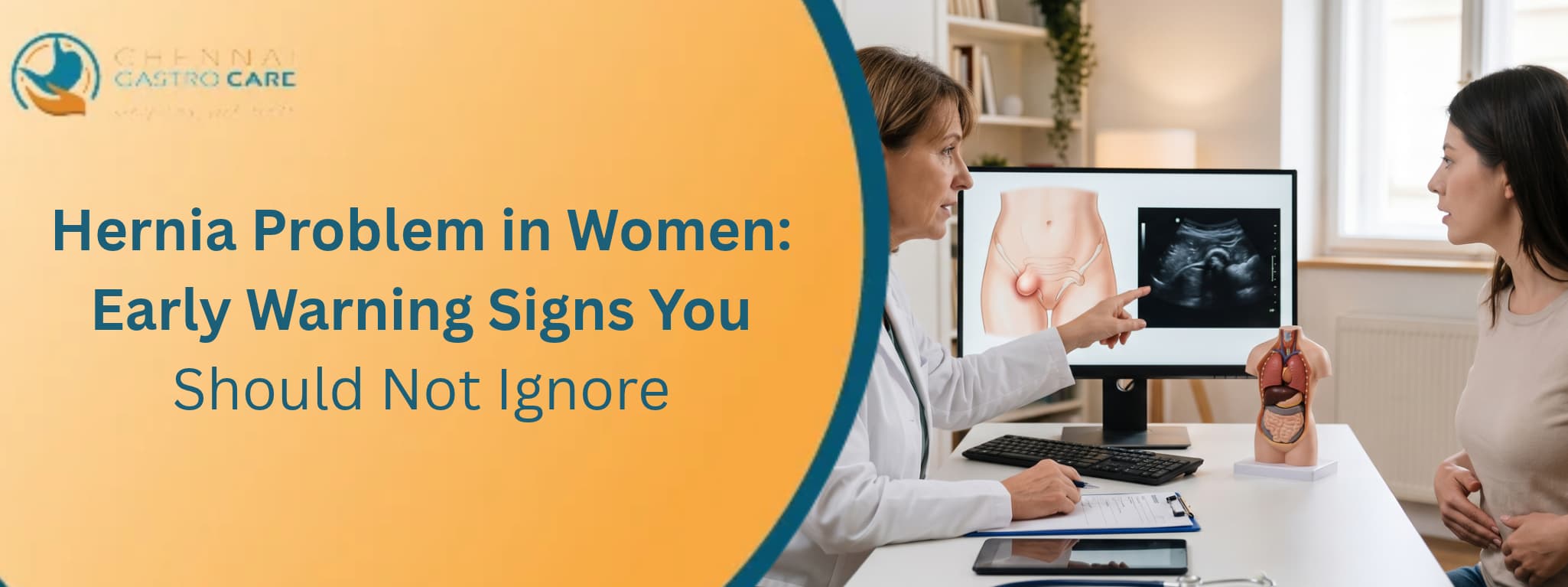

Hernias are widely assumed to be a men's health issue, usually pictured as a prominent, visible bulge in the groin. Because of this misconception, hernias in women are frequently overlooked, misdiagnosed, or dismissed as routine menstrual cramps, pelvic issues, or normal body changes after childbirth. In reality, female hernias are often smaller, deeper, and hidden beneath muscle layers causing vague pelvic pressure or burning rather than an obvious lump. Recognizing these subtle early warning signs is vital, especially since certain hernia types common in women carry a higher risk of sudden complications if left untreated.
Why a Hernia Problem in Female Patients Often Goes Unnoticed
Most people picture a hernia as a man's condition with a large, visible lump. In women, the picture is different, which is why diagnosis is often delayed by months or even years.
Smaller, deeper hernias
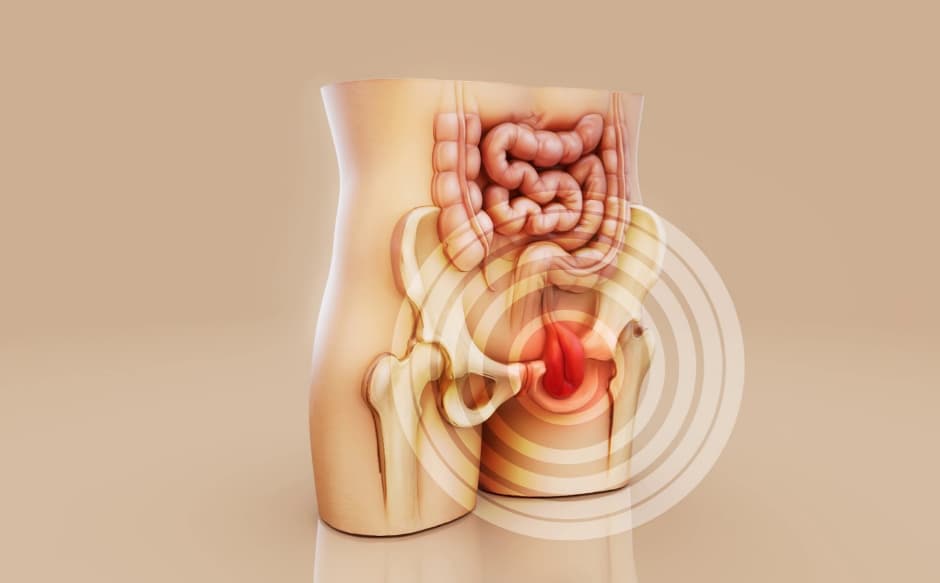
Lower abdominal and pelvic hernias in women tend to be smaller, deeper, and less noticeable than the clear bulge seen in men. You may feel only a vague ache or pressure, with nothing to see in the mirror.
Mistaken for gynaecological problems
When pain is the only symptom, it can be mistaken for pelvic inflammatory disease, endometriosis, ovarian cysts or fibroids. If those checks come back normal but the pain persists, ask your doctor whether a hernia could be the cause.
"It's just post-pregnancy stretching"
Some abdominal changes after childbirth are normal, so many women put up with discomfort. A bulge or pain that lingers, or worsens with activity, deserves a proper examination.
Early Warning Signs of Hernia in Women
These signs are easy to dismiss because they build slowly. Spotting two or three of them together is a good reason to book a consultation.
A soft bulge that comes and goes
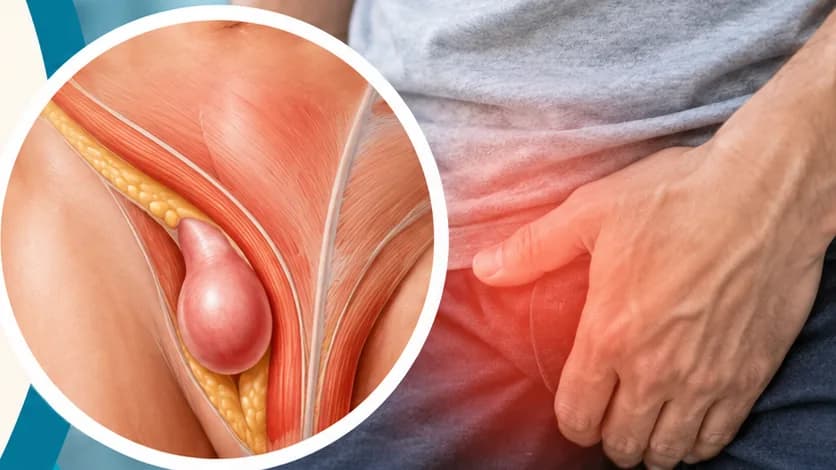
The lump may grow when you cough, laugh or stand, and may disappear when you lie down. It can sit in the groin, near the belly button or along a surgical scar.
A dragging, heavy or burning groin
Many women describe pressure, fullness or a dragging feeling, especially after standing or walking for long. The ache can spread to the hip, back or leg.
Pain that changes with activity or your cycle
Pain that sharpens with lifting, bending or coughing is a classic clue. Some women also notice groin pain that flares around their periods, which is one reason hernias get mistaken for period pain.
Upper abdominal discomfort and indigestion
Hernias higher up, such as epigastric or hiatus hernias, can cause indigestion, bloating and discomfort rather than a lump, and are often linked to acid reflux.
Types of Hernias Women Are Most Likely to Develop
While a hernia can occur anywhere there is a weakness in the abdominal wall, a woman's unique pelvic anatomy, the physical demands of pregnancy, and high rates of gynecological surgery make certain types much more common. Understanding the "why" behind these hernias helps in recognizing their specific symptoms.
Femoral Hernia (The Hidden Risk)
Because women have a wider pelvic bone structure to accommodate childbirth, the femoral canal (the space where blood vessels pass from the abdomen down to the leg) is slightly wider than in men. This creates a prime weak spot located deep in the groin crease.
- The danger: The femoral canal is a rigid, narrow space. When bowel pushes into it, it gets trapped easily. A femoral hernia has the highest rate of strangulation (loss of blood supply to the trapped bowel) among all hernias. Because of this risk, surgeons rarely take a "wait and watch" approach; femoral hernias are repaired promptly upon diagnosis.
Umbilical Hernia (The Belly Button Bulge)
The navel is a natural anatomical weak point. During pregnancy especially with multiples or a large baby the rapidly expanding uterus places immense, sustained outward pressure on the abdominal wall. This stretches the connective tissue and the umbilical ring, allowing fatty tissue or a small loop of intestine to poke through. It often presents as a soft, squishy bulge right at or slightly above the belly button. It is also highly common in women carrying excess weight, which exerts constant internal pressure on this exact spot.
Inguinal Hernia (The Groin Ache)
Though commonly thought of as a male condition, women still frequently develop inguinal hernias. In women, the inguinal canal houses the round ligament, which supports the uterus. When intra-abdominal pressure spikes (due to pregnancy, heavy lifting, or chronic coughing), tissue can be forced into this canal. Instead of the distinct, visible lump men often get, women with inguinal hernias typically experience a deep, burning ache or dragging sensation in the groin that worsens after a long day on their feet.
Incisional Hernia (The Surgical Scar Weakness)
Any time a surgeon cuts through the abdominal muscle and fascia (the tough connective tissue covering the muscles), that area heals as a scar. Scar tissue is only about 70% to 80% as strong as original, uninjured tissue. Because women undergo high rates of pelvic and abdominal surgeries most notably Cesarean sections (C-sections), open hysterectomies, and gynecological laparoscopies they are at high risk for incisional hernias. A bulge can form along or just beneath the old incision line, sometimes years after the original operation.


Understanding Hernias During and After Pregnancy
Pregnancy subjects the female body to profound biomechanical and hormonal changes, making the abdominal wall particularly vulnerable to structural damage. This section breaks down why these hernias happen, how to distinguish them from normal post-pregnancy body changes, and the safest timeline for treatment.
Why Pregnancy Raises the Risk
As a baby grows, the expanding uterus places immense, continuous outward pressure against the inner abdominal wall. Simultaneously, the body releases hormones like relaxin, designed to loosen ligaments and connective tissues in preparation for childbirth. This combination of high internal pressure and chemically softened tissue creates the perfect environment for the abdominal wall (fascia) to stretch and eventually tear, most commonly resulting in an umbilical (belly button) hernia.
Hernia vs. Diastasis Recti: Knowing the Difference
Many women mistake a hernia for Diastasis Recti, a very common postpartum condition, or vice versa. While they can occur at the same time, they are fundamentally different:
-
Diastasis Recti: This is a stretching and thinning of the linea alba (the central connective tissue holding your "six-pack" muscles together). It causes a ridge, dome, or "pooch" down the middle of the abdomen when you engage your core (like sitting up in bed). It is a thinning of tissue, not a tear, and can often be improved with specialized core physiotherapy.
-
Hernia: A hernia is an actual physical hole or tear in the connective tissue. Tissue (usually abdominal fat or a loop of intestine) pushes through this gap, creating a distinct, localized lump. No amount of physical therapy can close this hole; it requires surgical repair.
Because both conditions present as an abdominal bulge, an ultrasound or a physical exam by a surgeon is the only definitive way to confirm which condition you have.
When is Repair Done? (Timing the Surgery)
If a hernia develops while you are pregnant, doctors almost always recommend a "watch and wait" approach. Operating on a pregnant woman carries unnecessary risks for both mother and baby. Unless the hernia becomes trapped or strangulated (an extreme emergency where blood supply is cut off), surgery is entirely avoidable during gestation.
Surgeons typically advise waiting until you have fully delivered and recovered from postpartum changes usually at least 3 to 6 months after birth before planning a repair. Additionally, if you plan to have more children, your surgeon may recommend delaying the repair until your family is complete, as the pressure of a subsequent pregnancy could easily tear the surgical mesh and cause the hernia to return.
Quick Self-Check: Could It Be a Hernia?
This is not a diagnosis, but it helps you decide how urgently to seek advice. Answer honestly, and note down your answers for your consultation.
-
Do you have a lump that changes when you stand, cough or lie down?
-
Has groin, pelvic or lower abdominal pain lasted more than a few weeks without a clear cause?
-
Does the pain increase with lifting, exercise or a long day on your feet?
-
Did the symptoms begin after pregnancy, a C-section or other abdominal surgery?
-
Have gynaecological tests found nothing to explain the pain?
If you answered yes to two or more, get examined. Not every groin lump is a hernia, as an enlarged lymph node can look similar, which is another reason to let a surgeon check.
Emergency Warning Signs: Do Not Wait
A hernia that becomes trapped can cut off the blood supply to the bowel within hours. If you notice any of the signs below, go to the nearest emergency room instead of booking a routine visit.
-
Sudden severe pain in the groin, thigh or abdomen
-
Nausea or vomiting
-
A hard, tender lump that will not go back in or does not shrink when you lie down
-
A bulge that turns red, purple or dark
How Hernias in Women Are Diagnosed and Treated
Diagnosis starts with a careful conversation and a physical examination. Treatment depends on the type, size and your symptoms.
Diagnosis
The doctor feels for the hernia while you sit, stand or cough. An ultrasound or CT scan is used when the hernia is small, deep or hard to confirm by touch, which is common in women.
Treatment
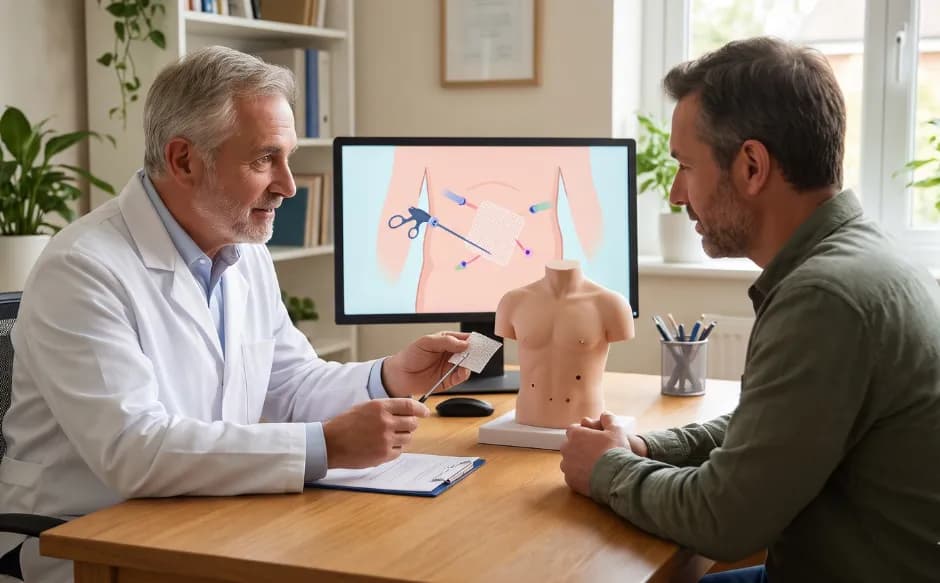
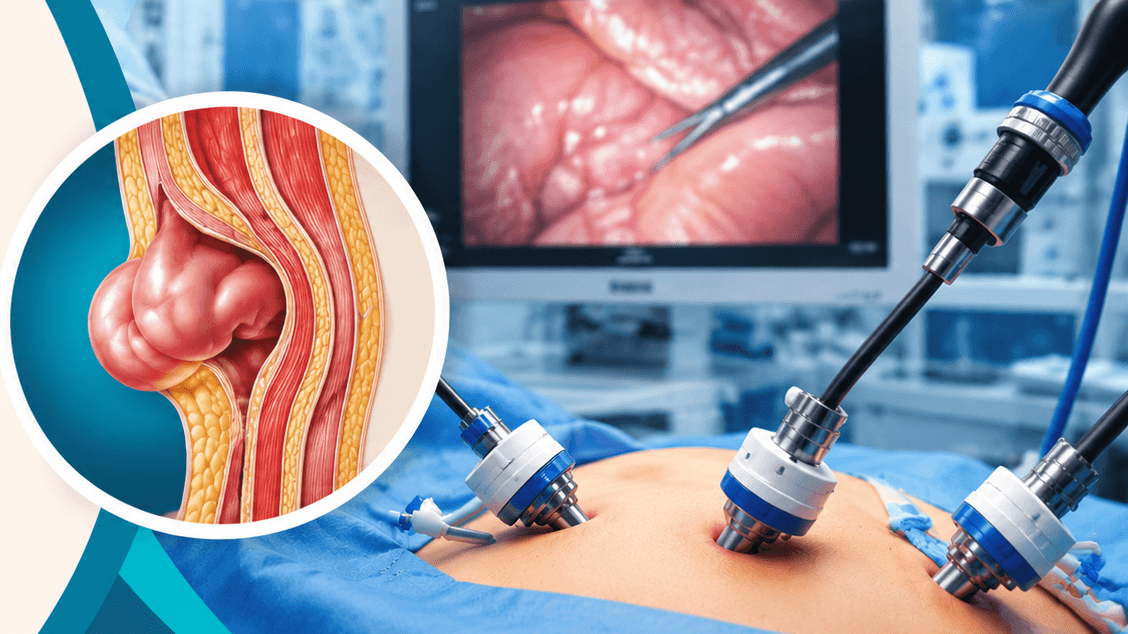
No tablet or exercise can close a hernia. Surgery repairs the gap with stitches and, in most cases, mesh. Very small, symptom-free hernias can sometimes be watched, but femoral hernias are generally repaired early. Many women opt for keyhole (laparoscopic) repair, which uses small cuts, tends to cause less pain and scarring, and allows a quicker return to routine, depending on the hernia and your health.
Recovery and prevention
After laparoscopic repair, many people resume light routine within one to two weeks, though your surgeon will advise on lifting. To protect the repair and lower your risk, maintain a healthy weight, treat constipation and chronic cough, and rebuild core strength gradually after childbirth.
Hernia Care for Women in Chennai: Chennai Gastro Care
You should not have to push for an answer when something feels wrong. At Chennai Gastro Care in Alwarpet, every consultation is with the surgeon, and you leave understanding your diagnosis, your options and your recovery plan in plain language.
Dr. Deepak Subramanian (MBBS, MS, MRCS Edinburgh, FIAGES, FALS) is a Senior Consultant in Laparoscopic, GI and Bariatric Surgery with over 14 years of experience and more than 5,000 surgeries. His practice covers laparoscopic repair of inguinal, ventral, umbilical and hiatus hernias,
Wondering if your symptoms point to a hernia? Chat with our care assistant for quick guidance and support, or call +91 99400 24638